
Not Quite a Diamond
Reassessing Russia’s Zircon Missile

Open-source evidence indicates that Russia's 3M22 Zircon is not the hypersonic cruise missile it is widely assumed to be, but a maneuverable quasi-ballistic system.
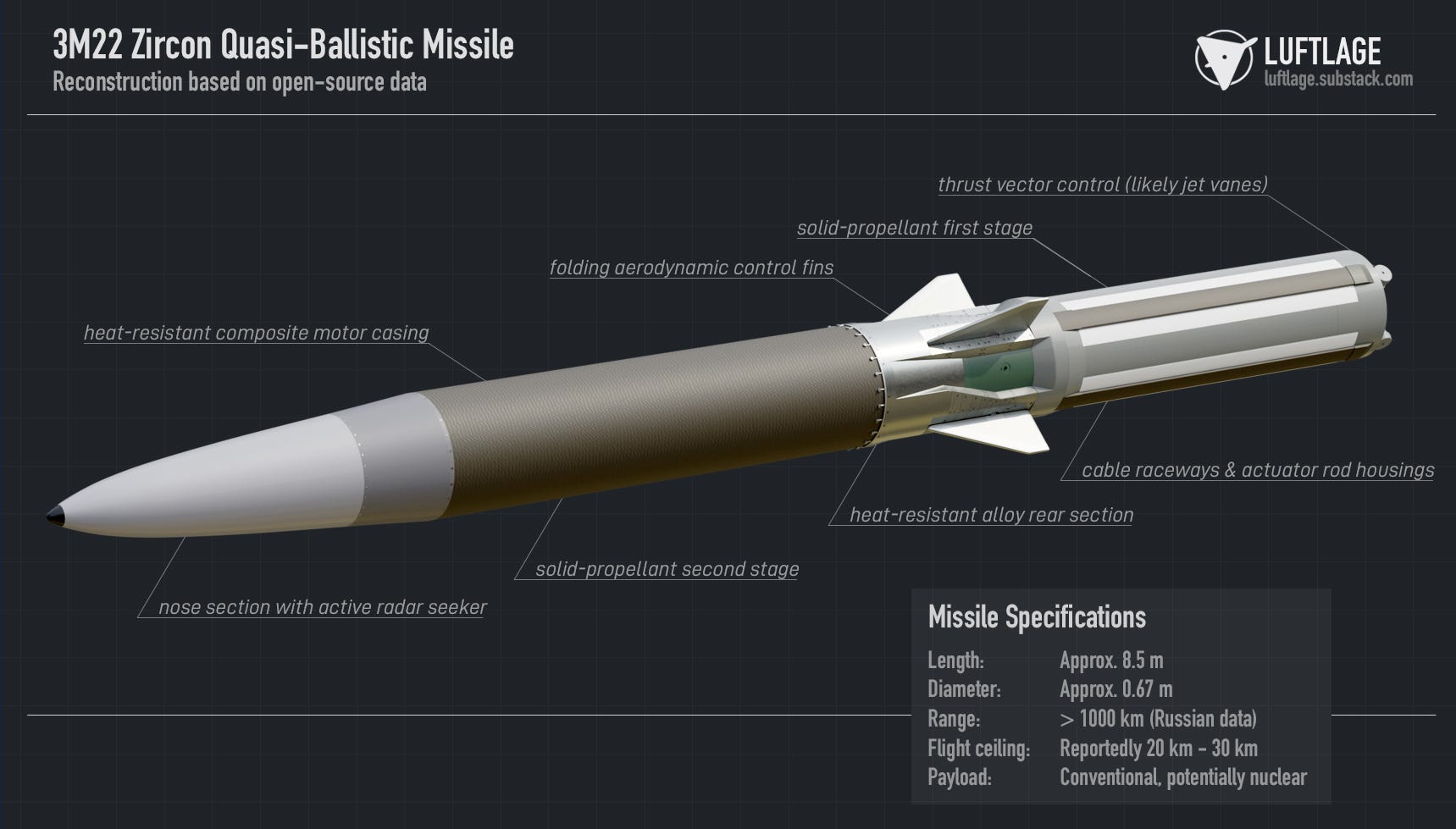
The Russian Navy’s Novel Weapon
In development since at least the early 2010s, NPO Mashinostroyeniya’s 3M22 Zircon missile entered service around 2022. Primarily a naval system designed for both anti-ship and land-attack missions, the missile is fielded on Russia’s Admiral Gorshkov-class frigates as well as newly constructed and, potentially, modified older examples of the Yasen-class nuclear-powered attack submarines. A land-based variant using what appears to be modified launchers of the K-300P Bastion coastal defense system has also entered service. While Zircon was initially planned for development in both naval and air-launched variants, work on the air-launched version has reportedly been halted for now.
References by Russian President Vladimir Putin, together with the system’s inclusion in nuclear exercises, may indicate that Zircon has a nuclear-delivery role in addition to its conventional mission. However, whether the system is actually deployed with nuclear warheads remains unconfirmed.
December 2024 footage of a Zircon test launch in the Eastern Mediterranean
What distinguishes Zircon from other Russian combined anti-ship and land-attack missiles is not only its maximum range, claimed to be in excess of 1,000 km, but also its characterization as a ‘hypersonic’ system. By conventional definition, the latter implies an ability to maneuver within the atmosphere at sustained speeds above Mach 5, thereby significantly complicating interception. This claimed feature has earned Zircon a place among Russia’s much-vaunted ‘novel weapons’ designed to use advanced technologies to overcome or bypass Western missile defenses.
Baptism of Fire
Zircon’s first combat use appears to have occurred in either late 2023 or early 2024. Subsequent launches from occupied Crimea remained sporadic and, potentially, experimental. This changed markedly in 2026 when Zircon use increased significantly, with Ukraine reporting strike packages including up to eight missiles. Russia has also reportedly begun launching Zircons from ground-based launchers deployed in the Kursk region.
According to Ukrainian Air Force data, Russia has used about 46 Zircon missiles against Ukraine as of 16 June 2026. Ukraine claims to have intercepted about 41% of Zircons launched, which would be a higher interception rate than the rate currently achieved against Russia’s quasi-ballistic Iskander-M missiles. This data, however, cannot be independently verified.
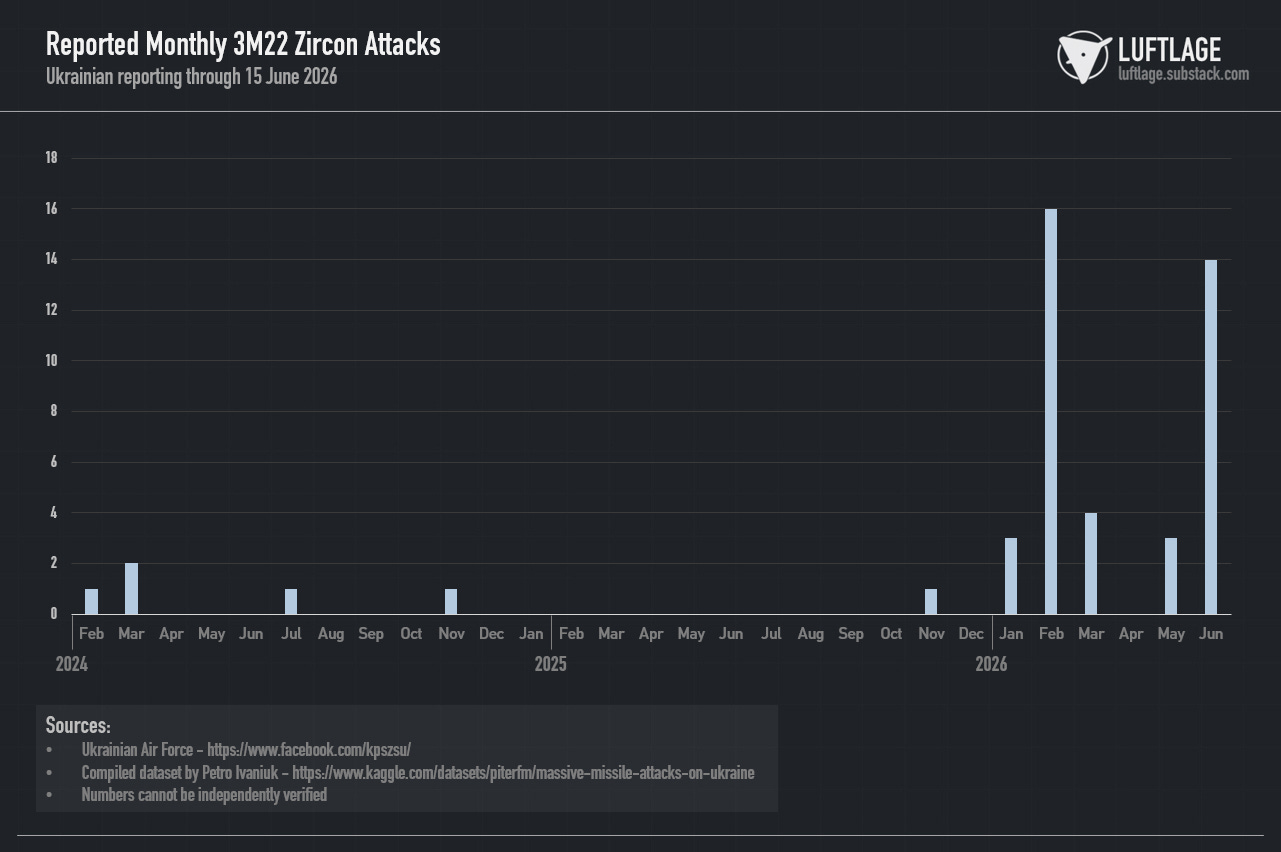
The increased use of Zircon might indicate not only a technical maturation of the system but also growing stockpile numbers. According to Ukraine’s Main Directorate of Intelligence, Russia’s Zircon stockpile grew from about 40 in April 2024 to as many as 230 systems in April 2026. This buildup is likely to have come at a cost. According to Russian documents examined by Ukrainian media outlets, Zircon is Russia’s most expensive conventional missile system after Oreshnik, with unit costs reportedly exceeding USD 5 million.
Unclear Trajectories
While independently verifiable data on Zircon performance is unavailable, Russia has released a number of figures on the system’s trajectory. Putin has claimed that Zircon can attain speeds of up to Mach 9 and, commenting on a 2020 test, the Chief of the General Staff, Valery Gerasimov stated that the missile had covered 450 km in 4.5 minutes at a maximum altitude of 28 km, with peak speeds exceeding Mach 8.
Suspected 3M22 Zircon impacts in Kyiv during the 2 June attack - Source: Ukrainian Social Media
Publicly available Ukrainian assessments of Zircon remain fragmentary and, at times, contradictory. Several points stand out, however. Some Ukrainian sources have described Zircon as displaying a highly varied speed profile. One newspaper report based on unnamed sources claimed that the missile flies at approximately Mach 5.5, briefly accelerates to Mach 7.5 when approaching the target area and then slows down to around Mach 4.5 before impact. The claim that Zircon decelerates in its terminal phase has been repeated by several sources, including a Ukrainian Air Force spokesman who suggested that the missile’s terminal slowdown to Mach 4.5 opened a window of opportunity for interception by dedicated anti-missile interceptors like Patriot PAC-3. Some Ukrainian outlets have also reported that Zircon’s trajectory is at least partially ballistic in nature.
An Enigmatic System
Despite its increasing combat use in Ukraine and its prominence in Russian strategic messaging, Zircon remains one of Russia’s least understood missile systems. So far, there has been no consensus on what exact type of missile system Zircon is and no clarity on the closely related question of what type of propulsion it uses.
The most commonly held theory is that Zircon is a hypersonic cruise missile using air-breathing propulsion. This would imply Russian mastery of highly complex supersonic combustion ramjet (scramjet) technology, which is required for air-breathing hypersonic systems. Zircon’s categorization as a hypersonic cruise missile has been implicitly reinforced by questionable illustrative choices. Commentary on the missile is regularly accompanied by renders of the American scramjet-powered Boeing X-51 Waverider testbed.
A second interpretation is that Zircon may not be genuinely hypersonic, but instead a high-supersonic cruise missile. This would allow the use of conventional ramjet technology, in which Russia has long experience. In this reading, Zircon could represent an evolution of NPO Mashinostroyeniya’s existing ramjet-powered P-800 Oniks anti-ship and land-attack cruise missile.
A third theory proposes that Zircon is not a cruise missile at all, but a quasi-ballistic missile. Such a system would use rocket rather than air-breathing propulsion and would follow an unpredictable trajectory largely, or entirely, within the atmosphere, featuring both powered flight and unpowered glide phases.
Solving the Zircon Puzzle
Despite the lack of official information on Zircon, enough open-source material is in fact available to support a more detailed assessment of the system. This includes information on the entities involved in its design and development, heavily censored launch footage, Russian-released imagery of missile components, and photographs of debris recovered in Ukraine.
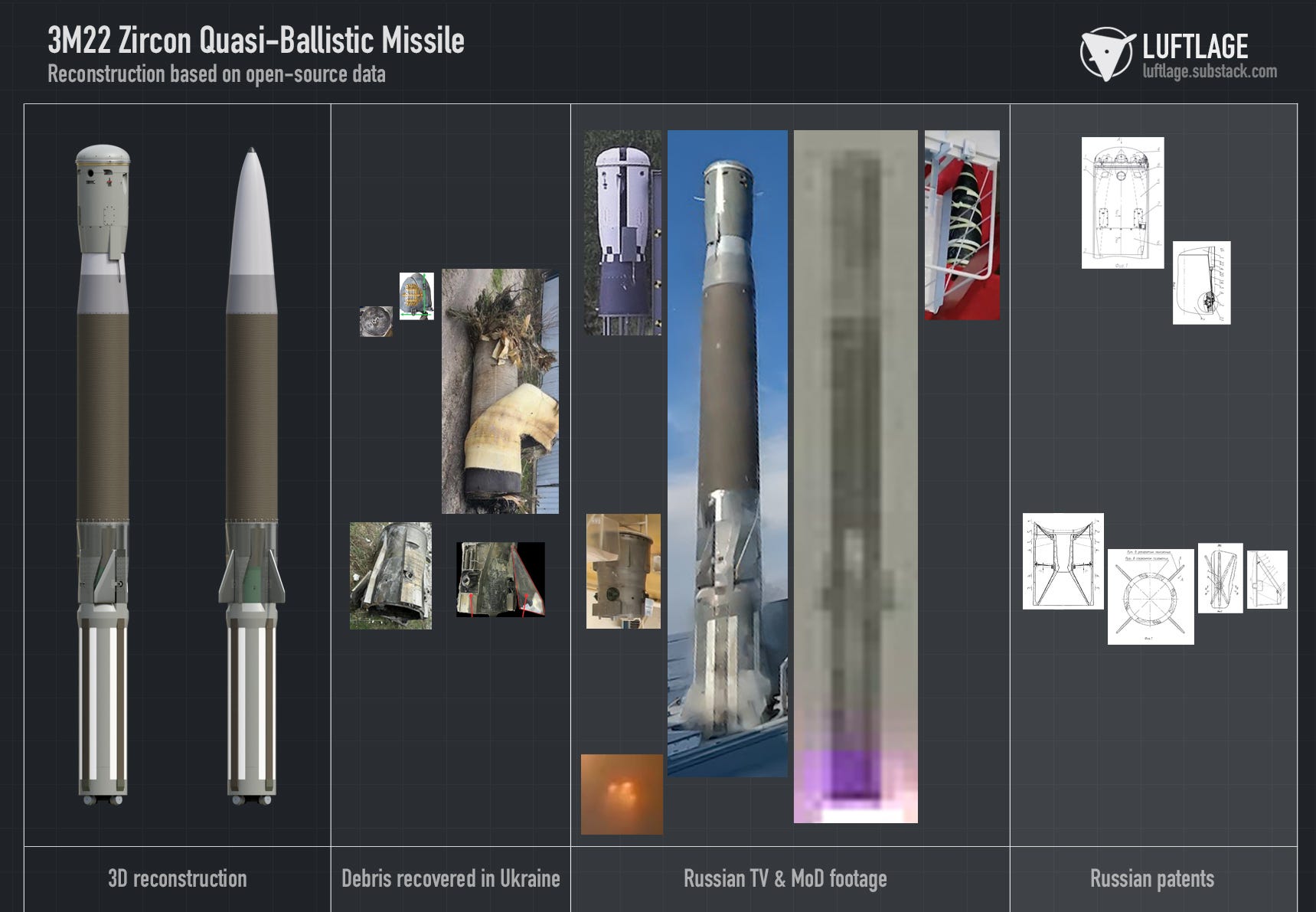
Notably, the available evidence also includes a number of patents that can be linked to Zircon by cross-referencing them with debris recovered in Ukraine. Several of these patents list NPO Mashinostroyeniya’s Aleksandr Dergachyov as a co-author, suggesting that he may have played a more prominent role in the program. Dergachyov had earlier laid out NPO Mashinostroyeniya’s plans for future hypersonic anti-ship missile development in a 2016 Russian military journal article. He was subsequently awarded the title Hero of Labor for undisclosed achievements and, in 2026, was appointed acting head of NPO Mashinostroyeniya.

Solid Clues and State Awards
A first way to assess how Zircon is powered is to identify the propellant used in its main stage. Liquid propellant could, in theory, support all three forms of propulsion. Solid propellant would be consistent with either rocket or regular ramjet propulsion but would weigh strongly against a scramjet. Although solid-propellant scramjets remain a subject of research interest, work in this area is still exploratory. Most scramjet development has consequently focused on liquid hydrogen and hydrocarbons.
Articles on Zircon frequently claim that the missile uses an advanced liquid propellant named Detsilin-M. On closer inspection, however, these assessments appear to be based on circular and conflated reporting. In 2015, a Russian military official stated that the country was working on a new type of fuel that could extend the range of strategic cruise missiles, as well as another type intended for hypersonic missiles. A year later, he specified that a new fuel called Detsilin-M increased the range of existing cruise missiles by 250-300 kilometers. Various media outlets then combined these two data points with the first reports of Zircon testing, which emerged around the same time. This highly speculative link has been repeated ever since.
Evidence that is both more recent and more directly related to Zircon points to the use of solid propellant. In 2023, the Russian government awarded Yuri Milekhin with the title ‘Hero of Labor.’ Milekhin heads Russia’s leading developer of solid rocket-propellant formulations, the ‘Soyuz Federal Dual-Technology Center.’ State media reported that the corresponding decree cited Milekhin’s role in developing an innovative high-energy composite solid propellant using an energetic binder for the Zircon missile. In his remarks, Milekhin stated that Soyuz’s solid propellants ensured ‘the high combat capabilities of our solid-fuel missile systems, including hypersonic ones’.
The Missing Air Intake
Air-breathing propulsion systems, such as conventional ramjets or scramjets would require the integration of an air intake into the missile’s structure. In Zircon’s case, however, no such intake can be clearly identified.
A hypothetical air intake could be located either on the fuselage or in the missile’s nose section. Russian launch footage of Zircon, as well as imagery of debris recovered in Ukraine, show the main-stage fuselage to be a tubular wound-composite structure with no apparent air intake.
The absence of a visible air intake on the fuselage has prompted speculation that Zircon may use a circular nose-mounted air intake similar to those of the P-800 Oniks or Boeing’s HyFly concept. However, a patent filed for Zircon’s jettisonable launch cap and depicting the missile’s nose section shows no such intake. While filmed from a considerable distance, a single Russian launch video of slightly higher quality does not reveal an air intake either. A Russian documentary series on Zircon included footage of the missile’s nose section undergoing static testing. Although the component was obscured with plastic bags and painter’s tape, its outline likewise shows no sign of an air intake.
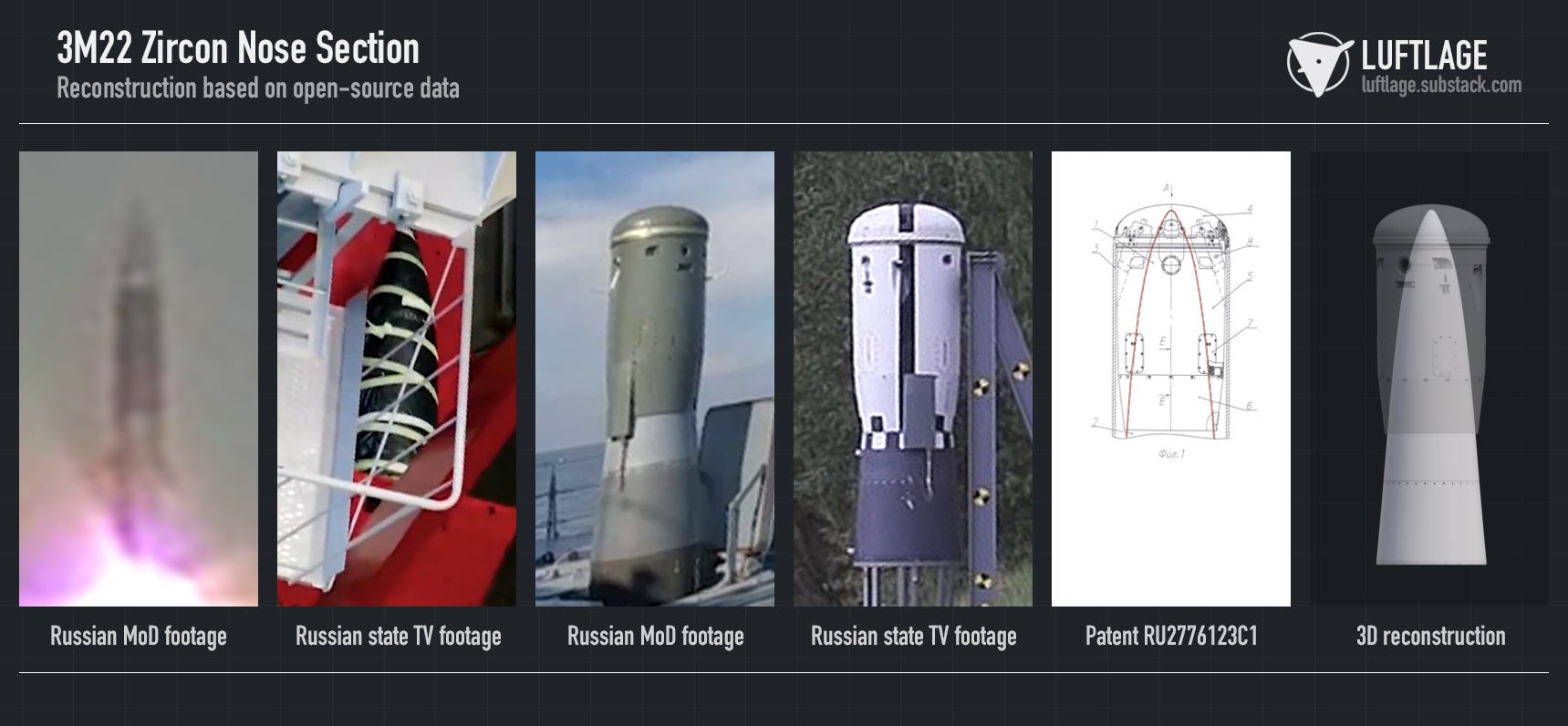
Considering NPO Mashinostroyeniya’s propensity for unusual and complex engineering solutions, an unconventional air-intake configuration that is not immediately visible cannot be ruled out. At the same time, the absence of visible air-intake features does tilt the balance of probability towards non-air-breathing propulsion.
Quasi-Ballistic Lineages
Apart from its past role in Soviet ICBM development, NPO Mashinostroyeniya is best known for its long history of designing air-breathing supersonic anti-ship missiles. At first glance, this institutional legacy might suggest that any new system would follow the same technological path. There are indications, however, that the company has also worked on quasi-ballistic anti-ship missile concepts over an extended period.
As far back as 1999, the company filed a patent for a two-stage, solid-propellant anti-ship missile flown on a quasi-ballistic profile. A booster stage places the missile on a lofted ballistic trajectory. On the descending leg, the missile pulls up into a flat glide. The second-stage motor fires at a point chosen for the mission: late, near the target to maximize terminal velocity, or earlier, to maximize range. Although the missile described is considerably lighter, shorter range, and slower than Zircon, the patent shows that NPO Mashinostroyeniya was already exploring anti-ship missiles that pair partially ballistic trajectories with alternating boost and glide phases.

Conceptual work on such systems continued, including on substantially more capable designs. In 2011, the company filed a patent for a maneuverable quasi-ballistic system intended to operate at high-supersonic and hypersonic speeds at altitudes above 20 km. Equipped with an unusual conformal radar, the system was described as suitable for engaging both land and naval targets.
Revealing Debris
Arguably the most significant evidence of Zircon’s propulsion comes from wreckage recovered in Ukraine. Debris shown to journalists by Kyiv’s Scientific Research Institute of Forensic Expertise (KNDISE) includes a circular metal assembly closely resembling the forward closure of a solid-propellant rocket motor. The component shows no central air intake of the kind a solid-propellant ramjet would require. Other items in the same collection of debris, as well as context, strongly indicate that it belonged to the missile’s second stage rather than its booster.
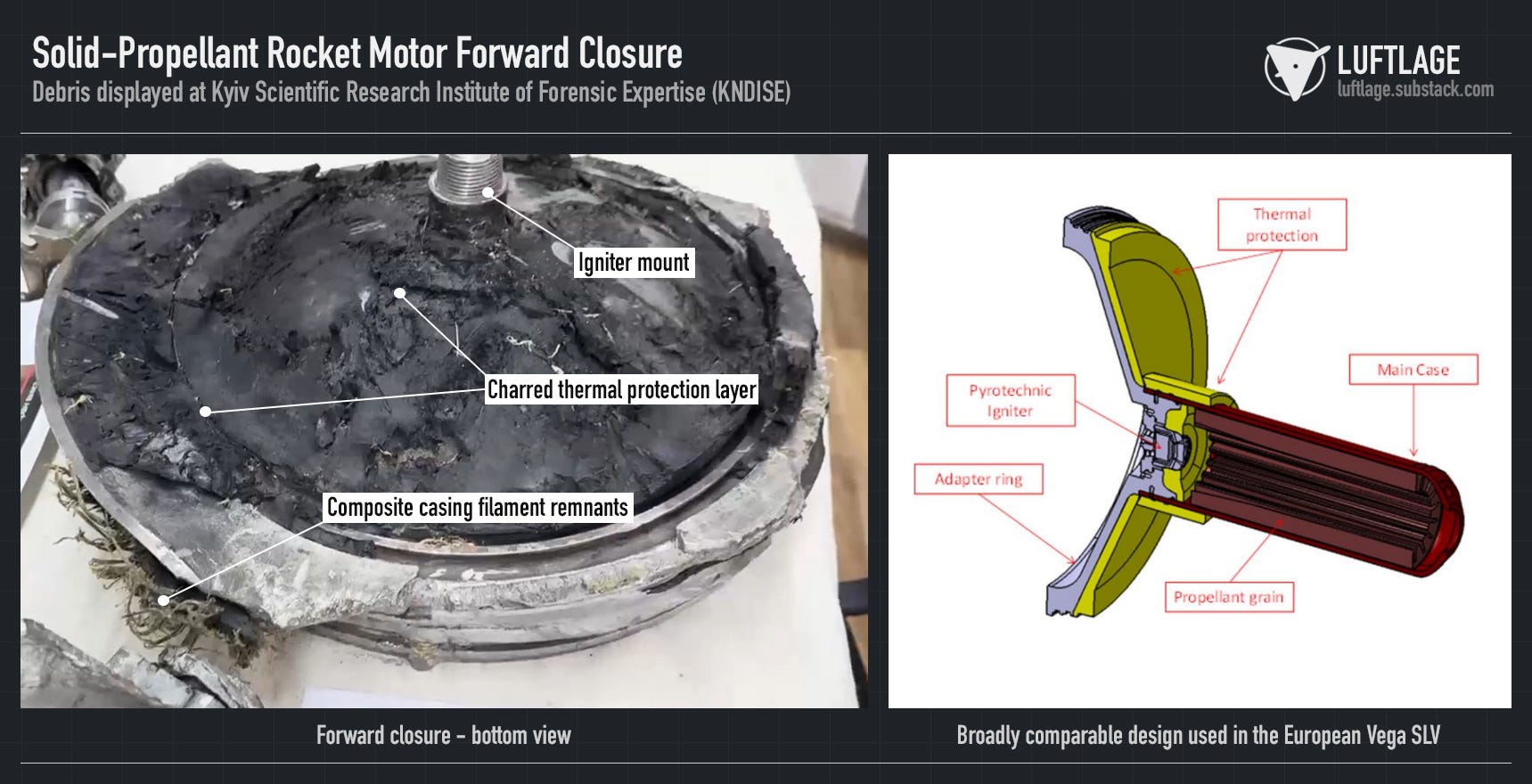
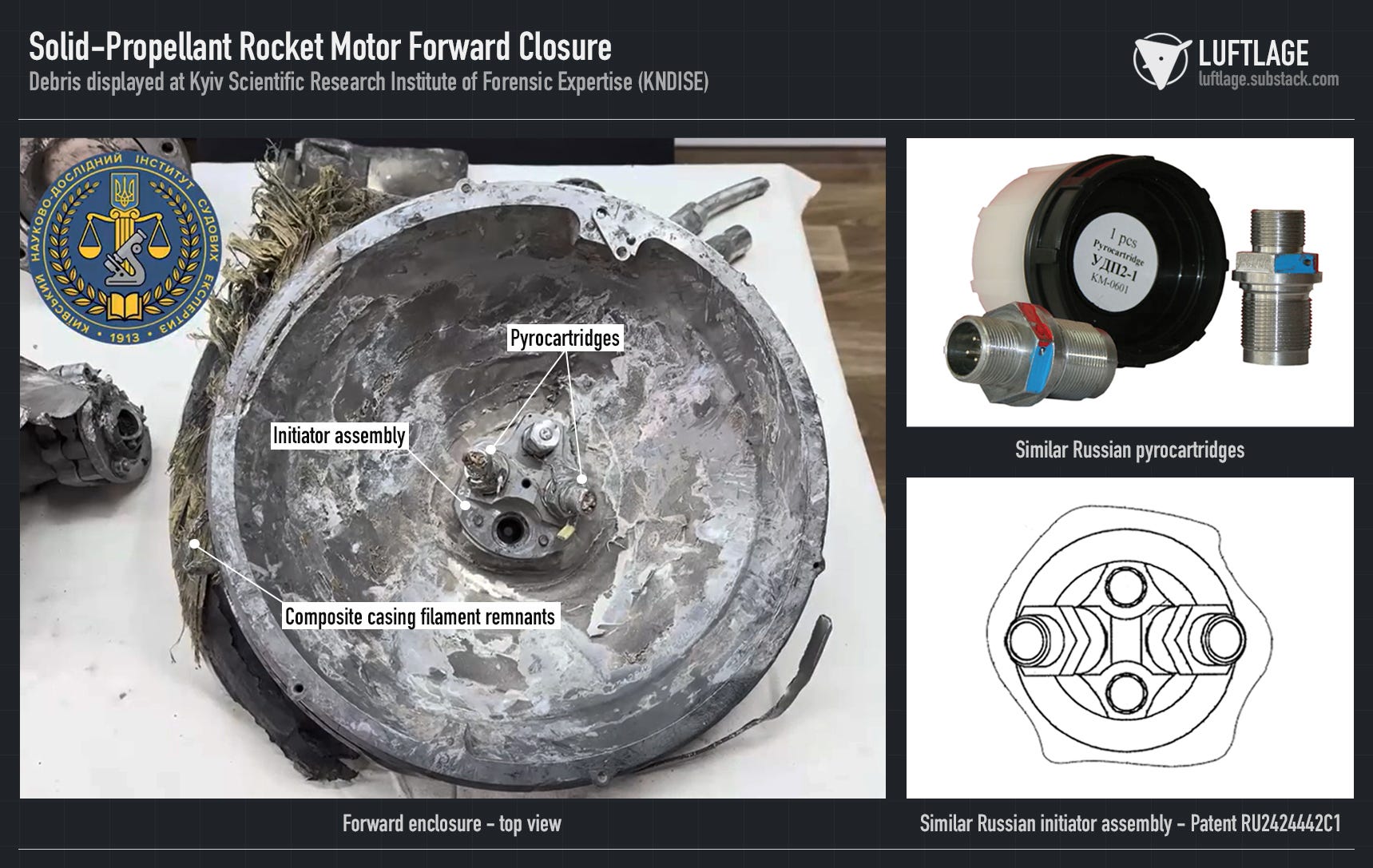
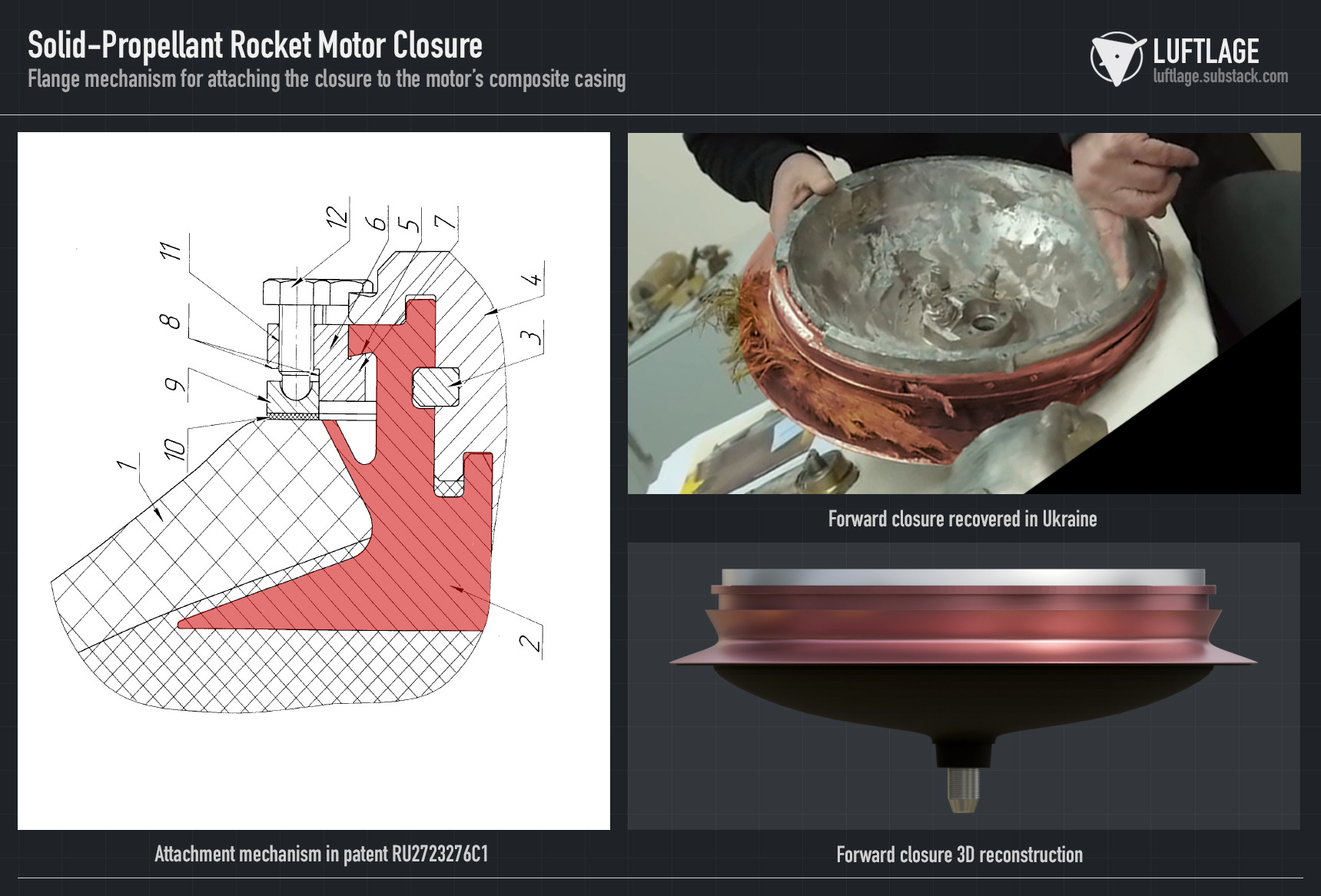
The component not only corresponds to the general design characteristics of solid-propellant rocket motors, but can also be linked to more specific work conducted by NPO Mashinostroyeniya. In 2019, Aleksandr Dergachyov, together with engineers from NPO Iskra, Russia’s preeminent solid-propellant motor design bureau, filed a series of three patents (1, 2, 3) relating to a solid-propellant rocket motor design. The patents describe a motor using an extended gas duct to accommodate aerodynamic control-fin actuators and designed to withstand flight in an inert state, strongly implying use in an upper stage. Notably, the distinctive flange mechanism connecting the metal nozzle to the motor’s composite casing closely matches the flange mechanism visible on the component recovered in Kyiv.
Moving up the Maneuverability Spectrum
Taken together, the available evidence strongly suggests that Zircon is not a hypersonic cruise missile but rather a maneuverable quasi-ballistic system using rocket propulsion. Such a characterization would also be consistent with Zircon’s relatively early entry into service, as a quasi-ballistic system would be less demanding to develop than a scramjet-powered hypersonic cruise missile. It would also help explain the significant variation in speed observed in Ukraine, a pattern which would be expected from quasi-ballistic missiles combining relatively short boost phases with decelerating glide phases.
The observed divergence between the popular narrative of Zircon as a hypersonic cruise missile and the system’s likely nature as a quasi-ballistic missile can be interpreted in a number of ways. On the one hand, there is a strategic communications angle to the existing misperception. The ambiguity created by Russian secrecy has allowed the wider public to believe that Zircon is a more advanced system than the available evidence suggests. This belief, in turn, helps sustain the narrative that Moscow is outpacing the United States in the hypersonic arms race. Russia’s unwillingness to publish more detailed imagery of the system, which stands in contrast to other missile systems such as Kinzhal, may at least be partially explained by a desire to sustain this perception.
On the other hand, Zircon cannot be reduced to a mere propaganda tool, either. Crucially, the oversimplified distinction between hypersonic and non-hypersonic systems that underpins much of popular discourse does not reflect the more complex nature of hypersonic flight. Reality is better understood as a spectrum of maneuverability, in which systems are defined by the degree and duration of maneuver they can sustain at hypersonic speeds rather than by binary labels. Even if a quasi-ballistic missile does not correspond to the most advanced end of that spectrum, as a hypersonic cruise missile would, it can still pose formidable interception challenges.
Incrementally moving up the spectrum of maneuverability can, in fact, be a sensible development path. The development of an intermediate system, such as a maneuvering quasi-ballistic missile, allows countries to field an operational capability much earlier than if they aimed for a higher-end capability from the outset. At the same time, the development of intermediate systems allows for continued progress in key technologies that could eventually be leveraged for more advanced capabilities, including thermal management, materials science, and terminal precision guidance under hypersonic conditions. Japan’s Hyper Velocity Gliding Projectile (HVGP) and Iran’s Fattah series are both examples of such an incremental development approach, in which an initial system situated closer to the ballistic end of the spectrum is intended to be succeeded by a design closer to the hypersonic cruise missile or glider end.
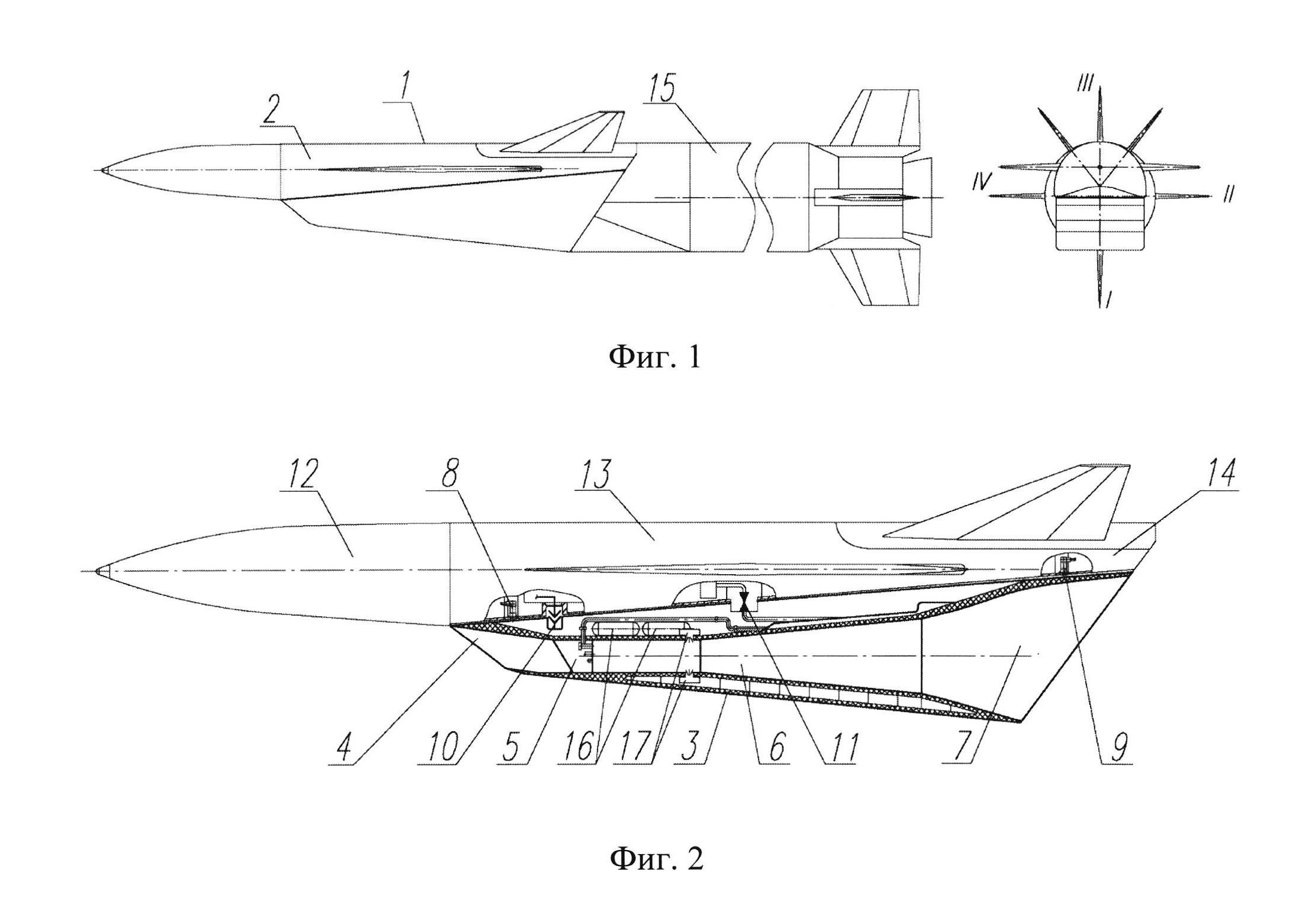
Russia might be following a similar path. In his 2016 article setting out objectives for future Russian anti-ship missile development, Aleksandr Dergachyov referred not only to the use of more powerful rocket motors, but also to ambitions to develop scramjets capable of sustaining flight at speeds of at least Mach 6. NPO Mashinostroyeniya has filed at least one conceptual patent for a hypersonic cruise missile design featuring a jettisonable scramjet. Thus, over the medium to long term, Zircon may eventually prove to be a stepping stone towards more advanced hypersonic capabilities.
For now, however, Russia is not yet fielding a hypersonic cruise missile. Zircon, instead, seems to be a less exquisite, if still operationally, relevant quasi-ballistic system. True to its name, Zircon may glitter in flight but is not quite a diamond.